A Swedish Perspective on Cash’s Resilience
I write this from Sweden, a country often cited as the poster child for the cashless society. We embarked early on a journey toward digital payments, and for a time, it seemed cash might disappear from our daily lives. But we hit a ceiling, and authorities began pulling back. Why? Because they realized what most citizens already knew—access to cash isn’t just convenient, it’s vital.
Today, the Swedish National Bank is actively considering how access to cash services can be better enabled, paying particular attention to the guaranteeing of cash payment for essential goods and services such as food, healthcare and medicines. It’s a remarkable reversal that holds important lessons for the entire payment industry.
The Data Tells a Different Story
Despite years of predictions about cash’s decline, the numbers paint a compelling counter-narrative and confirm that consumer needs and behaviours remain a key driver in the shaping of banking and payments.
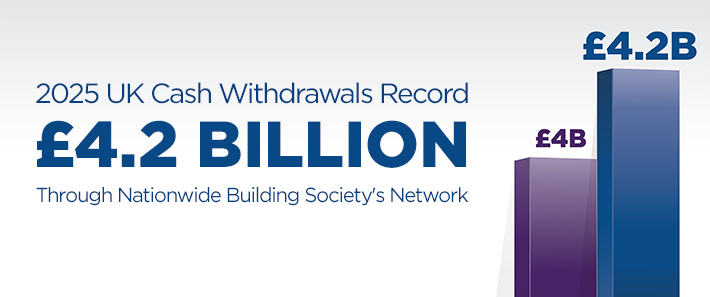
Recent data from both the Federal Reserve and the European Central Bank shows that cash in circulation continues to grow. In the UK, where contactless card payment was first introduced, cash withdrawals reached £4.2 billion in 2025 through Nationwide Building Society’s network, surpassing the previous record of £4 billion. This marked the fourth consecutive year of growth for this key financial service provider.
Why does cash persist? Many people value the tangible nature of physical money. Research from Nationwide found that 13% of Britons—roughly seven million people—believe paying exclusively in cash makes it easier to save. There’s psychological power in physically handing over money that simply doesn’t exist when tapping a card.
Perhaps most telling is what consumers are saying with their banking decisions. A YouGov survey revealed that 88% of people wouldn’t open an account with a bank that doesn’t offer cash access—a figure that has risen 5% in just two years.
When Digital Fails, Cash Endures
A series of events have crystallized cash’s role as essential infrastructure. The massive blackout that struck Spain and Portugal, severe flooding and wildfires in the United States, and other disruptions have reminded policymakers that cash is our most reliable fallback when digital systems fail. How to pay during an emergency is now a very important topic/top of mind.
Governments are responding accordingly. In the U.S., the Payment Choice Coalition advocates for laws ensuring everyone can use cash. Across Europe, several countries now advise households to keep €70–100 in cash at home, and the European Central Bank is considering a Europe-wide guideline.
Beyond Sweden, other countries have reversed course on cashless ambitions. Norway made it mandatory for all businesses to accept cash. Finland has developed national emergency payment systems, including backup solutions for ATMs designed to continue operating even if a bank’s core systems are down. In Austria, as ATM networks were downsized in rural areas, the central bank is installing its own machines in underserved municipalities. Hungary has established legislation requiring an ATM in each municipality.
These aren’t isolated actions—they represent a fundamental recognition that cash access is a matter of financial inclusion and resilience.
The Shared ATM Network Solution
Here’s the challenge: financial institutions must continue providing cash services while ensuring the economics are viable.
The solution gaining momentum across Europe is network consolidation through shared ATM infrastructure. This trend began in Sweden in 2010 with Bankomat, where competing banks recognized that pooling their ATM assets and transferring management to a specialized third-party partner could improve profitability while maintaining or enhancing customer service.
The model is elegant in its efficiency. Instead of competing banks each maintaining overlapping networks with redundant coverage, they contribute their ATMs to a shared pool. As a result, customers can gain access to a larger network.
This approach is now expanding geographically across Europe, with successful implementations in the Netherlands (Geldmaat, launched in 2019), Belgium (Batopin), Luxembourg (Bancomat), and France (2SF), as financial institutions in multiple markets explore similar partnerships to balance regulatory requirements for cash access with commercial realities.
Beyond Cash: The ATM as a Service Hub
While ATMs excel at cash dispensing, technology now enables them to serve as comprehensive self-service banking hubs. Modern ATMs can handle check deposits, currency exchange, bill payment, loan payment, transfers, and numerous other transactions previously requiring a teller.
This transformation unlocks significant value. By displacing routine transactions from branches, institutions can repurpose their physical locations from transaction hubs to advisory centers, where staff focus on complex financial needs, relationship building, and value-added services.
However, realizing this opportunity requires the right strategy. It demands thoughtful decisions for hardware and software deployment, continuous innovation, and operational excellence in fleet management. Few financial institutions possess all these capabilities in-house, particularly as ATM technology becomes more sophisticated.
The Case for Specialized Partnership
This is where partnering with a specialist becomes essential. The right partner brings expertise across three critical dimensions:
Strategy and Innovation: Understanding which technologies and services will deliver the greatest return, how to optimize network coverage, and how to evolve the ATM channel as customer needs change.
Implementation Excellence: Deploying new capabilities efficiently, managing the technical complexity of modern ATM software and hardware, and ensuring seamless integration with existing banking systems.
Operational Management: Maintaining uptime, managing cash logistics, ensuring security and compliance, and providing a cost-effective day-to-day fleet management that keeps the network running smoothly.
Diebold Nixdorf’s
Branch Automation Solutions portfolio is designed specifically to help financial institutions maximize the efficiency and value of their ATM and branch operations while enhancing the consumer experience.
Looking Ahead
The conversation about cash’s future has matured. We’ve moved past the binary question of whether cash will disappear and arrived at a more nuanced understanding: cash is here to stay, but how we deliver cash services must evolve.
For financial institutions, the path forward combines regulatory compliance, customer service, and commercial viability. Shared ATM networks managed by specialized partners offer a proven model for achieving all three. Meanwhile, reimagining the ATM as a multi-service channel opens new opportunities to enhance both customer experience and financial performance.
In my discussions with banking leaders, I’m increasingly convinced that those who embrace these trends—who see cash services not as a legacy burden but as an opportunity for strategic partnership and innovation—will be best positioned for the future. The question isn’t whether to provide cash services. It’s how to do so in a way that serves customers, satisfies regulators, and makes economic sense.
Curious how leading institutions are executing this transformation?
Contact us today to speak to an expert and learn more.
Original video published in
Global Business Finance Review.


